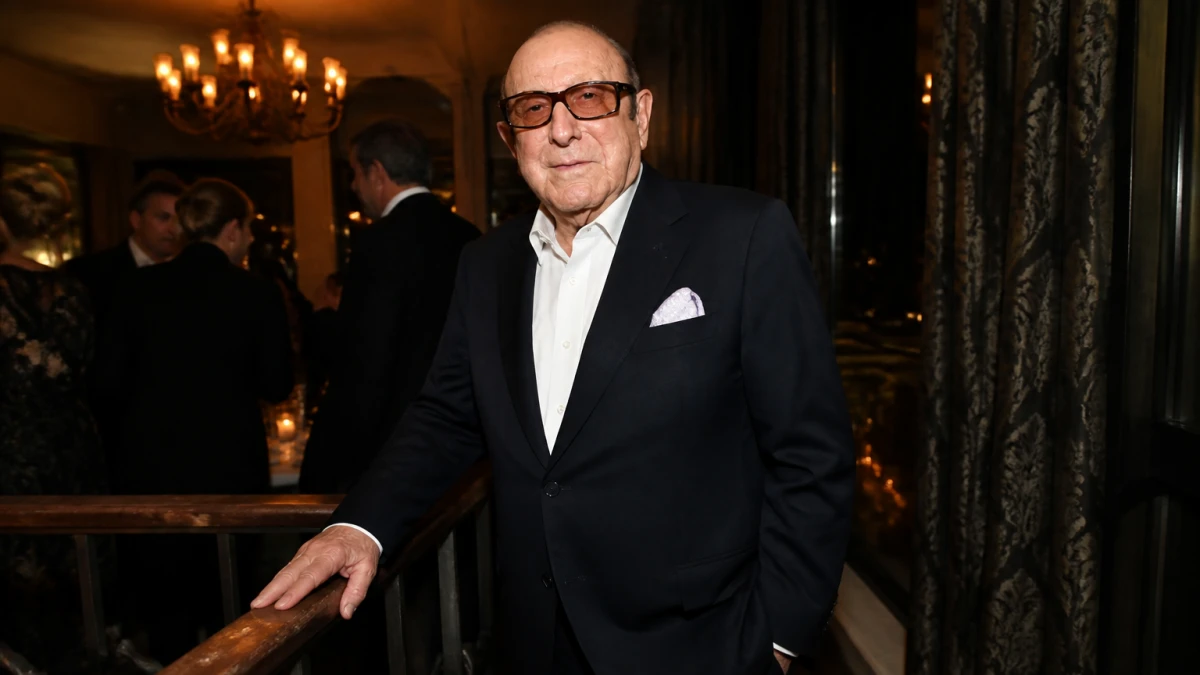
End of an Era in Music
Clive Davis, the legendary record executive who discovered and shaped the careers of Whitney Houston, Bruce Springsteen, and Alicia Keys, died on Monday at his Manhattan home. He was 94. His family confirmed he passed peacefully from an age-related illness, just weeks after a brief hospitalization for a respiratory infection.
Davis had been admitted to a New York hospital on May 29 as a precaution and was discharged days later. He had been recuperating at home before his condition deteriorated, a spokesperson said. The news triggered an outpouring from artists whose lives he touched.
A Career Forged by Rejection
Born in Brooklyn in 1932, Davis had no musical background when he joined Columbia Records as an attorney in 1960. He rose to president by 1967, opening the label to rock acts like Janis Joplin and Springsteen. But in 1973 he was abruptly fired amid expense-account allegations – later cleared of any criminal wrongdoing. The humiliation drove him to found Arista Records, where he would rebuild his reputation and discover his most iconic star.
At Arista, Davis revived the careers of Aretha Franklin and Dionne Warwick, signed Patti Smith, and in 1983 saw a young Whitney Houston perform in a New York club. Her debut album sold millions and turned her into a global phenomenon. Davis later told interviewers he knew instantly: “That voice comes once in a lifetime.”
After Arista, Davis launched J Records in 2000, where he nurtured an unknown Alicia Keys. Her debut “Songs in A Minor” earned five Grammys. Davis remained a force into his 90s as chief creative officer of Sony Music Entertainment, a role he held until his death.
At 22 years old, he changed my life when he signed me to Columbia Records. He treated me with the same respect and kindness as a 22-year-old nobody as he did after all my success. A great man.Bruce Springsteen
Tributes from Icons and Family
Alicia Keys called him “a dream-maker” who saw something in her before she saw it herself. Carlos Santana hailed Davis as “a visionary with an unerring instinct for greatness.” Barry Manilow said simply: “Without him, the world would not know me as it does.”
His family, including four children from two marriages, released a statement describing him as “the legendary music giant whose vision, instinct and tireless pursuit of excellence shaped the soundtrack of countless lives.” They added: “To us, he was Dad and Granddaddy, the steady center of our lives, the source of wisdom, strength, encouragement and unconditional love.”
The Soundtrack of Generations
Over five decades, Davis amassed five Grammy Awards and was inducted into the Rock and Roll Hall of Fame in 2000. His pre-Grammy gala became the industry’s most coveted invitation, a showcase where he introduced next-generation talents to a room of legends. Carlos Santana’s 1999 comeback album “Supernatural,” which sold 15 million U.S. copies and won nine Grammys, was just one product of Davis’s relentless pursuit of hits.
Even after being sidelined at Columbia, Davis never stopped betting on artists others overlooked. The music world now confronts the silence left by a man who made listening an art form of its own.